Why Choose Composite Sealing Materials for Global Sourcing? The answer begins with a practical question: what are the advantages of composite sealing materials in demanding applications?
Composite seals combine different layers, fibers, coatings, or elastomers. Each component contributes a specific function. A metal layer can improve pressure resistance. Graphite may support thermal stability. Elastomers can provide flexibility around uneven flange surfaces. This combination can reduce leakage risks when conditions change.
Materials scientist Michael F. Ashby wrote, “Materials are the stuff of design.” His statement is broad, not sealing-specific. Still, it explains why engineers select composites instead of relying on one material alone. Performance depends on temperature, pressure, chemical exposure, vibration, and installation quality.
In global sourcing, composite sealing materials can offer more than technical performance. Standardized constructions may simplify supplier comparisons. They can also support consistent specifications across factories and regions. Some designs reduce maintenance intervals, especially where shutdowns are expensive. Others improve sealing reliability in compact assemblies.
The details matter. A gasket that performs well at room temperature may fail near a hot pump outlet. A seal that resists chemicals may still compress poorly. Testing remains essential.
Supplier experience should include compression testing, media compatibility checks, dimensional inspection, and traceable batch records. Certifications can strengthen confidence, but they do not replace application testing. That is an uncomfortable truth.
Composite materials are not automatically better. Their value depends on correct design, verified manufacturing, and suitable installation. Buyers should request material data, tolerance information, test results, and clear service limits. With disciplined evaluation, composite sealing materials can balance durability, adaptability, and sourcing efficiency across international supply chains.
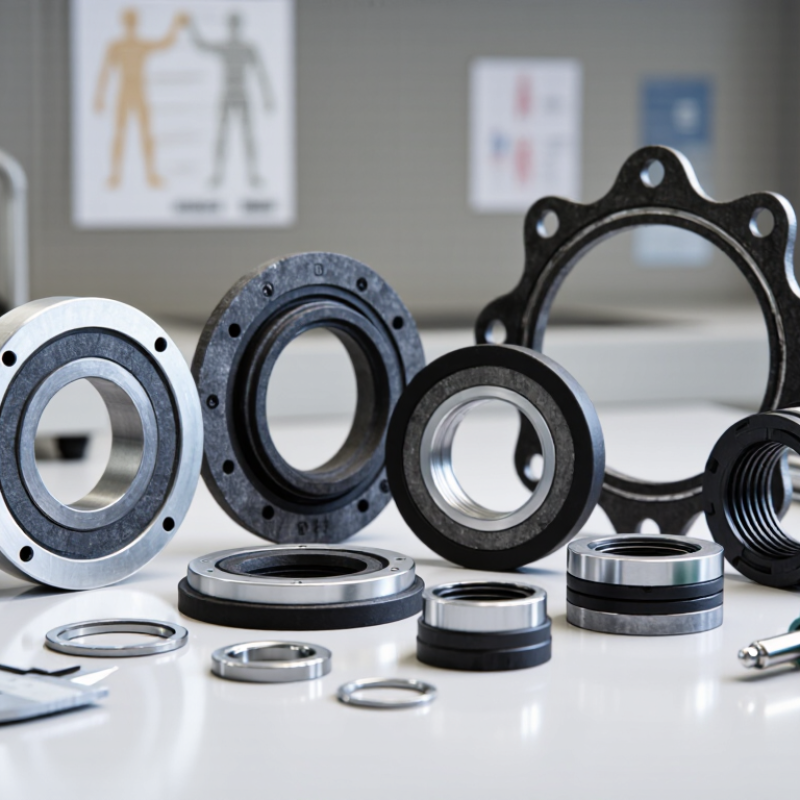
Composite sealing materials combine two or more substances into one sealing structure. Each material contributes a specific function. An elastomer may provide flexibility and recovery. A metal layer can add strength and dimensional stability. Fabric, graphite, or engineered polymers may improve temperature resistance and chemical protection.
These materials appear in gaskets, pipe connections, pumps, valves, and industrial equipment. Their layered design helps manage pressure, vibration, and uneven surfaces. For example, a reinforced gasket can compress around a flange while resisting tearing during installation. The exact construction depends on temperature, media, pressure, and movement. Small details matter.
In global sourcing, technical documents should identify every layer, thickness, tolerance, and test method. Suppliers should provide sample parts and traceable inspection records. Practical checks include compression recovery, leakage performance, hardness, and resistance to the intended fluid. A material that works well in a clean laboratory may behave differently after storage or repeated assembly. Composite does not mean perfect. Poor bonding, incorrect compression, or unsuitable storage can still cause failure. I have found that clear drawings often prevent more problems than impressive product descriptions. Source carefully. Test realistically.
What Are Composite Sealing Materials?
Composite sealing materials combine two or more material phases—such as fibers, graphite, elastomers, or fluoropolymers—to balance temperature resistance, chemical compatibility, flexibility, and sealing performance. The chart compares representative upper continuous service temperatures for commonly used composite sealing material families. Actual limits depend on formulation, pressure, media, and operating conditions.
Composite seals begin with the operating environment, not a catalog shape. Engineers define temperature, pressure, media, shaft speed, and flange movement.
A layered design may combine PTFE for chemical resistance, aramid for strength, and graphite for heat tolerance. Metal reinforcement can control extrusion under pressure. Small details matter.
Computer-aided stress analysis predicts compression, deformation, and contact pressure. Engineers then check groove dimensions, surface finish, and installation clearance. ISO 3601 and ASTM leakage methods support consistent inspection.
The U.S. Department of Energy reports that compressed-air leaks can waste 20–30% of compressor output. That figure explains why sealing force needs careful control.
Too little compression leaks. Too much compression increases friction and wear.
Manufacturing usually includes cutting, molding, bonding, machining, and dimensional inspection.
Each layer needs controlled thickness. Batch records should identify materials, curing conditions, and test results. Production samples can undergo pressure, temperature, chemical, and cycling tests.
In practice, a perfect drawing can still fail during assembly. Misalignment, damaged grooves, or rough handling may change performance. That part is often underestimated.
Industry market reports continue to show strong demand for engineered sealing solutions, but market growth alone proves nothing about quality. Supplier audits, traceability, and repeatable testing remain more reliable evidence.
Composite sealing materials support global sourcing because they combine practical performance with wider operating tolerance. Reinforced PTFE can reduce friction, while graphite or aramid layers improve heat and pressure resistance. The right construction also limits swelling when fluids change. That matters.
The U.S. Department of Energy’s Improving Compressed Air System Performance sourcebook reports that neglected systems may lose 20–30% of compressor capacity through leakage. A stable seal can reduce this risk, especially around vibrating flanges and frequently cycled equipment. The European Sealing Association’s technical guidance also stresses chemical compatibility, compression control, and surface finish. These details often determine service life more than material price. A lower-cost gasket may become expensive after one shutdown.
Composite materials can simplify international procurement when suppliers provide consistent dimensions, batch traceability, and test results. Specifying ASTM or ISO test methods helps buyers compare products across regions. Useful records include compressibility, recovery, leakage, temperature, and chemical-resistance data. For high-temperature systems, graphite-based designs may tolerate heat better than many elastomers. For aggressive chemicals, reinforced fluoropolymer structures may offer stronger resistance. Yet no material is universal. Installation torque, flange alignment, storage humidity, and contamination can still cause premature failure. This is the uncomfortable part: global sourcing does not remove engineering responsibility. A specification copied from one plant may perform poorly in another. Pilot testing remains sensible, even when the datasheet looks convincing.
Composite seals combine materials to solve problems that single-material seals often cannot. A PTFE or graphite layer can resist chemicals and heat, while an elastomer or metal carrier adds flexibility and load support. Traditional rubber seals remain cost-effective for clean, moderate-temperature service. However, they may swell in oils, harden near heat, or suffer compression set over time. Traditional metal gaskets tolerate pressure, but they need precise flange alignment. The comparison is not clean.
The U.S. Department of Energy’s compressed-air sourcebook reports that leakage can consume 20–30% of compressor output. Well-managed systems can reduce leakage below 10%. A composite seal may help maintain contact during vibration and thermal cycling. That benefit matters in global equipment sourcing, where maintenance conditions vary. Yet, composite designs can fail when filler chemistry, surface finish, or compression load is poorly matched. I have seen promising specifications fail during installation. Design data is not field performance.
Tips: Request ASTM F37 or F38 test results, not only a pressure rating. Compare temperature limits, fluid compatibility, compression set, and expected service hours. Ask suppliers for batch traceability and installation tolerances. Test samples with the actual fluid and flange finish. A cheaper traditional seal may still win in a stable application. Use composite materials where the operating window is genuinely demanding.
Global procurement makes material selection more demanding than choosing the lowest quote. Composite sealing materials may combine an elastomer with fabric, graphite, or polymer reinforcement. Buyers should verify chemical compatibility, temperature range, pressure resistance, compression set, and leakage performance under real operating cycles. Fit comes first.
Ask for lot-specific test reports, dimensional tolerances, surface-finish requirements, and batch traceability. ISO 9001 certification supports process control, but it does not prove that a seal fits your equipment. That distinction is often missed. Request test methods aligned with relevant ASTM or ISO standards, then compare results under matching conditions. A seal tested in clean water may behave differently in hot oil, steam, or abrasive slurry. Samples should be checked after installation, not only before purchase.
Logistics also deserves technical attention. UNCTAD’s Review of Maritime Transport 2023 states that ships carry over 80% of global trade by volume. Delays can therefore interrupt maintenance schedules and production lines. The World Bank’s 2023 Logistics Performance Index evaluates 139 economies using customs, infrastructure, tracking, and timeliness indicators. Buyers should examine safety stock, packaging protection, shipment visibility, and alternate production capacity. A 2020 McKinsey survey found that 93% of supply-chain leaders planned to increase resilience. That ambition can become expensive if specifications remain vague. I would question unusually low prices, unclear compound descriptions, and certificates without traceable test conditions. Small details matter.
| Material Construction | Typical Temperature Range | Typical Pressure Capability | Key Chemical Compatibility | Compression and Recovery Characteristics | Common Applications | Global Procurement Advantages | Critical Buyer Evaluation Points |
|---|---|---|---|---|---|---|---|
| PTFE Envelope with Elastomer Core | −60 to +260°C Temperature depends on the elastomer core and service medium. |
Typically suitable for low-to-medium pressure flange and equipment sealing; pressure rating depends strongly on design and core material. | Very broad chemical resistance; suitable for many acids, alkalis, solvents, and aggressive media. Compatibility must be checked for molten alkali metals, fluorine, and high-temperature reactive chemicals. | PTFE provides chemical resistance, while the elastomer core supplies elasticity and low initial leakage. Creep and cold flow should be assessed under sustained load. | Chemical-processing equipment, lined piping, pumps, valves, and pharmaceutical or food-processing systems where contamination control is important. | Broad chemical coverage Can reduce the need to stock many single-material gasket types. |
Check envelope integrity, core compound, food or pharmaceutical compliance, dimensional tolerances, flange finish, and temperature limits of the core. |
| Graphite-Faced Metal Laminate | Approximately −200 to +450°C Higher temperatures may be possible in controlled, non-oxidizing conditions. |
Commonly used for medium-to-high pressure flange service when properly designed and installed. | Good resistance to many hydrocarbons, steam, and numerous chemicals. Oxidizing environments can accelerate graphite degradation at elevated temperature. | Good conformability and thermal stability; metal reinforcement improves blowout resistance and handling strength. | Steam systems, refineries, thermal-oil lines, heat exchangers, and industrial pipe flanges. | High-temperature capability Good balance between mechanical strength and sealing conformability. |
Verify graphite purity, reinforcement alloy, oxidation exposure, gasket stress, pressure class, storage humidity, and installation torque requirements. |
| Aramid-Fiber Reinforced NBR Sheet | Approximately −40 to +120°C | Generally suitable for low-to-medium pressure industrial flange applications within the supplier’s certified pressure-temperature envelope. | Good performance with oils, fuels, hydrocarbons, air, and water. NBR is not the preferred choice for strong oxidizing chemicals, many aromatic solvents, or high-temperature steam. | Good compressibility, easy cutting, and reliable sealing on moderate flange irregularities. Long-term heat aging can reduce elasticity. | Water, oil, fuel, compressed-air, machinery, and general industrial piping systems. | Cost-efficient standardization Widely available in common sheet thicknesses and easy to fabricate locally. |
Confirm binder formulation, oil and fuel compatibility, thickness tolerance, density, tensile strength, compressibility, recovery, and certification requirements. |
| Expanded Graphite with Metal Insert | Approximately −200 to +450°C Temperature limits vary with oxidation conditions and insert design. |
Suitable for demanding flange service; pressure capability depends on insert geometry, gasket dimensions, and available compressive load. | Strong resistance to steam, hydrocarbons, and many process chemicals. Performance is reduced in strongly oxidizing atmospheres at high temperature. | Excellent conformability and low leakage potential. Metal insert improves strength, dimensional stability, and blowout resistance. | Steam, petrochemical processing, high-temperature piping, exhaust systems, and heat-transfer equipment. | Low leakage potential Useful where thermal cycling and high-temperature stability are important. |
Evaluate graphite oxidation resistance, insert material, edge protection, minimum seating stress, storage conditions, and handling damage risk. |
| Mica-Based Composite | Approximately −50 to +1,000°C Actual service limits depend on binder, reinforcement, and atmosphere. |
Typically used for low-to-medium pressure applications; not normally selected for high-pressure flange duty without specific qualification. | Good resistance to heat, flame, steam, and many combustion gases. Chemical compatibility varies with binder and reinforcement. | Excellent thermal stability but generally less compressible than elastomer-based sheet materials; requires suitable flange flatness and load. | Boilers, furnaces, exhaust systems, thermal equipment, and high-temperature pipe or duct connections. | Extreme-temperature service Maintains structural integrity where many polymeric materials fail. |
Check binder type, maximum continuous temperature, thickness uniformity, brittleness, cutting quality, and required seating stress. |
| ePTFE with Inorganic Filler | Approximately −200 to +260°C | Suitable for low-to-medium pressure service when the gasket is properly confined and compressed. | Excellent resistance to most acids, bases, solvents, and aggressive chemicals. Verify compatibility with molten alkali metals and specialized reactive media. | High compressibility and strong conformability to uneven or damaged flange surfaces. Creep resistance is improved by filler and material structure. | Chemical processing, large or irregular flanges, glass-lined equipment, and low-load sealing applications. | Flange tolerance flexibility Can simplify installation where surfaces are uneven or bolt loads are limited. |
Assess filler type, creep relaxation, dimensional recovery, minimum compression, chemical test data, and suitability for vacuum service. |
Note: The performance figures shown are typical engineering ranges rather than universal ratings. Final selection should be based on the actual medium, temperature, pressure, flange design, surface finish, bolt load, regulatory requirements, and the supplier’s current test data.
They combine two or more materials into one sealing structure. An elastomer can add flexibility and recovery. Metal can provide strength and dimensional stability. Fabric, graphite, or engineered polymers may improve heat and chemical resistance.
They are used in gaskets, pipe connections, pumps, valves, and industrial equipment. Their layered construction helps manage pressure, vibration, and uneven flange surfaces. A reinforced gasket can compress around a flange without tearing during installation. Small details matter.
Selection should consider temperature, pressure, fluid chemistry, movement, and surface finish. Storage humidity and installation torque also affect performance. A seal suitable for clean water may swell in oil. No material is universal.
A stable seal can reduce leakage around vibrating flanges and frequently cycled equipment. Compressed-air leakage may waste 20–30% of compressor capacity. Composite layers can maintain contact during vibration and thermal cycling. That matters.
Traditional rubber seals can be economical in clean, moderate-temperature applications. However, they may swell in oils, harden near heat, or develop compression set. Composite designs can offer better resistance across wider operating conditions. Not always.
Metal gaskets can tolerate high pressure but often require accurate flange alignment. Composite seals may handle uneven surfaces and vibration more effectively. Their performance still depends on correct compression and compatible materials. A comparison is not simple.
Request layer details, thicknesses, tolerances, test methods, and traceable inspection records. Useful results include compressibility, recovery, leakage, hardness, temperature resistance, and fluid compatibility. Ask for sample parts before approving large purchases. Datasheets alone are insufficient.
Incorrect torque, flange misalignment, contamination, poor bonding, and repeated assembly can damage seals. Testing should use the actual fluid, flange finish, and expected temperature range. Pilot testing remains sensible, even when specifications look convincing. I would not trust a copied specification blindly.
Composite sealing materials combine two or more engineered components, such as metal supports, fibers, elastomers, graphite, or specialized coatings, to create seals with balanced mechanical and chemical properties. Their design and manufacturing involve selecting compatible materials, controlling layer structure, shaping the seal for its application, and testing it under pressure, temperature, vibration, and fluid exposure. This tailored approach allows composite seals to meet demanding requirements across different industries and operating environments.
For global sourcing, what are the advantages of composite sealing materials? They can offer improved temperature resistance, pressure stability, flexibility, corrosion protection, durability, and reliable sealing performance compared with many traditional single-material options. Their adaptable construction may also reduce maintenance needs and extend service intervals. Before procurement, buyers should evaluate application conditions, material compatibility, dimensional accuracy, quality consistency, production capacity, documentation, packaging, lead times, and total ownership cost. A careful comparison of technical performance and supply reliability helps ensure that the selected composite sealing solution is practical for long-term international purchasing.

Royflexa Rubber