Sealing failures rarely begin with a dramatic rupture. They often start with a hardened O-ring, a flattened lip, or a microscopic leakage path. For engineers asking “what factors affect material performance in sealing applications,” the answer extends beyond material selection. Temperature, pressure cycling, fluid chemistry, compression, surface finish, installation quality, and aging interact continuously. A seal that performs well at room temperature may swell in fuel or crack after repeated thermal cycling.
Professional guidance supports this broader view. ASTM D2000 classifies elastomers by heat resistance and fluid compatibility, while ISO 23936-2 addresses polymeric materials used in oil and gas environments. NORSOK M-710 also emphasizes rapid gas decompression resistance for critical energy applications. These standards demonstrate an important point: laboratory strength alone cannot predict field reliability. Grand View Research’s industrial seals market analysis and MarketsandMarkets’ seals industry reporting both identify demanding operating conditions, maintenance needs, and longer service life as major market drivers. The numbers describe market pressure, but the hardware tells the clearer story.
In practice, technicians should record actual temperatures, pressure spikes, media concentration, and installation torque. A clean groove and controlled compression can matter as much as the compound name. Small scratches may become leakage channels. Excessive compression may accelerate permanent deformation. I have seen specifications appear correct while installation details remained unclear. That is an uncomfortable gap. Material performance depends on the whole sealing system, not one attractive datasheet value. This article examines the top factors affecting sealing material performance in 2026, using standards, industry evidence, and practical failure mechanisms.
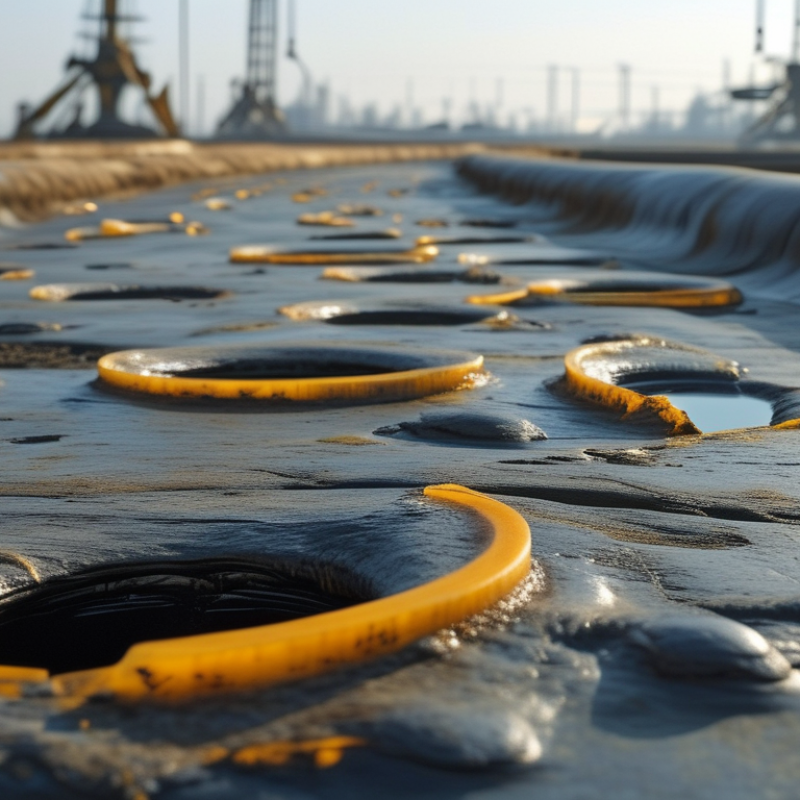
2026 Top Factors Affecting Sealing Material Performance?
Material Choice: NBR −30–120°C, EPDM −50–150°C, FKM −20–200°C
Material selection begins with the real temperature range, not the expected average. NBR suits many oil-contact applications from −30°C to 120°C. It can perform well around pumps, hydraulic fittings, and lightly heated machinery. However, prolonged heat near its upper limit may harden the seal and reduce recovery. That detail is easy to miss.
EPDM covers a wider low-temperature range, from −50°C to 150°C. It is often considered for hot water, steam, weather exposure, and some chemical environments. It is not a universal choice for oil service. Swelling can appear after repeated contact with incompatible fluids. A small test ring may reveal this faster than a catalogue.
FKM operates from approximately −20°C to 200°C, making it useful for demanding heat and chemical conditions. Yet its lower-temperature flexibility is less impressive than EPDM’s. A seal may look suitable at 180°C, but pressure, movement, and installation damage still matter. Check the actual compound, not only the material name. Temperature ratings also vary with pressure, exposure time, and sealing design. In field inspections, a polished shaft, uneven groove, or dry installation can explain failure better than temperature alone. Engineers should validate the choice with fluid compatibility tests and realistic thermal cycling. We sometimes overtrust the chart. That deserves reconsideration.
| Performance Factor | NBR −30 to 120°C |
EPDM −50 to 150°C |
FKM −20 to 200°C |
Selection Consideration |
|---|---|---|---|---|
| Primary Strength | Strong resistance to petroleum-based oils and fuels; widely used for general hydraulic and pneumatic sealing. | Strong resistance to hot water, steam, weathering, ozone, and polar fluids. | Strong resistance to high temperature, fuels, mineral oils, and many aggressive chemicals. | Choose the elastomer according to the dominant fluid, temperature, and environmental exposure. |
| Continuous Temperature Capability | Common compounds are suitable for approximately −30 to 120°C. |
Common compounds are suitable for approximately −50 to 150°C. |
Common compounds are suitable for approximately −20 to 200°C. |
Actual limits depend on compound formulation, pressure, exposure time, and seal design. Short-term peaks may differ from continuous service limits. |
| Low-Temperature Flexibility | Generally suitable down to about −30°C. |
Generally suitable down to about −50°C. |
Typically less suitable at low temperatures than NBR or EPDM. |
For cold-start systems, verify low-temperature retraction and brittleness resistance, not only the nominal temperature range. |
| Petroleum Oils and Fuels | Can swell or lose strength in many petroleum oils and fuels. |
NBR is a practical general-purpose choice; FKM is preferred when higher temperature or chemical resistance is required. | ||
| Hot Water and Steam | Performance may deteriorate in hot water or steam. |
Commonly selected for hot-water and steam service. |
Compatibility depends strongly on compound grade and service conditions. |
Confirm pressure, steam temperature, exposure duration, and the specific compound before final selection. |
| Weathering, Ozone, and UV Exposure | May require protection or formulation improvements. |
EPDM is commonly favored for outdoor sealing where petroleum-fluid exposure is not the primary concern. | ||
| Acids and Alkalis | Compatibility varies significantly by chemical and concentration. |
Often suitable for many dilute acids, alkalis, and polar fluids. |
Resistant to many chemicals, but not universally compatible. |
Always check concentration, temperature, and chemical compatibility data for the exact medium. |
| Abrasion and Wear Resistance | Seal geometry, surface finish, lubrication, pressure, and installation quality can be as important as material selection. | |||
| Compression Set Resistance | Suitable for many standard sealing applications. |
Especially useful for elevated-temperature static sealing. |
Strong performance at elevated temperatures when correctly compounded. |
Low compression set helps maintain sealing force during long-term static service. |
| Typical Applications | Hydraulic seals, pneumatic systems, fuel systems, oil seals, and general-purpose industrial gaskets. | Water systems, outdoor equipment, HVAC components, brake-fluid applications, and steam-related service. | High-temperature engine areas, fuel systems, chemical-process equipment, and demanding industrial sealing. | Application suitability must be validated against pressure, movement, fluid chemistry, temperature cycling, and regulatory requirements. |
| Common Selection Risk | Premature swelling, softening, or cracking when exposed to ozone, weathering, hot steam, or incompatible fluids. | Swelling or degradation in petroleum oils, fuels, and some hydrocarbon-based fluids. | Higher material cost and possible incompatibility with certain low-molecular-weight fuels, hot water, or steam conditions. | Do not select solely by temperature range; fluid compatibility and operating conditions must be evaluated together. |
Engineering note: The temperature ranges shown are representative service ranges for commonly used compounds. Actual performance varies with formulation, hardness, pressure, dynamic speed, surface finish, fluid composition, exposure time, and installation conditions.
: A controlled groove supports correct compression and movement. Small errors may cause leakage, extrusion, or excessive friction.
Check groove width, depth, corner radius, and compression against the selected seal size. Measure several positions.
Ra ≤0.8 μm is a practical target for many sealing interfaces. The application may require a different value.
Directional machining marks can create leakage paths. Inspect the actual sealing track, not a nearby smooth area.
Check damaged edges, inconsistent radii, chips, oil residue, and polishing debris. Small marks can matter.
Use calibrated instruments and record readings from several positions. Transitions and drilled ports may produce different results.
Include assembly trials, temperature exposure, and repeated movement when relevant. Drawings alone are not enough.
Use aging data that reflects temperature, pressure, gas composition, and exposure time. Short tests may not represent years of service.
Measure hardness, tensile strength, elongation, mass change, volume change, and compression set. Visual checks are also useful.
It can reveal blistering, cracking, or permanent distortion. A seal may look normal while losing recovery force.
Poor sample preparation, missing conditioning history, and untraceable material batches reduce confidence. Neat tables can still mislead.
Investigate them instead of deleting them. Real equipment is rarely as clean as a laboratory setup.
In 2026, understanding what factors affect material performance in sealing applications is essential for achieving reliable, long-term service. Material selection should match the operating temperature and environment: NBR is suitable for approximately −30 to 120°C, EPDM for −50 to 150°C, and FKM for −20 to 200°C. Engineers must also evaluate thermal cycling, pressure, and deformation by reviewing compression-set results according to ASTM D395. These tests help indicate whether a seal can maintain its shape and contact force over time.
Fluid compatibility is equally important and can be assessed through ISO 1817 volume-change testing. Seal geometry, dimensional control, and surface finish also influence leakage resistance, so ISO 3601 tolerances and a surface roughness of Ra ≤0.8 μm should be considered. For demanding H₂S and CO₂ service, 2026 validation should include aging data generated under ISO 23936 to confirm material stability and sealing performance throughout the expected operating life.

 Royflexa Rubber