2026 Best Materials for Oil Resistant Applications

Time:2026-10-02 Author:Isabella
0%

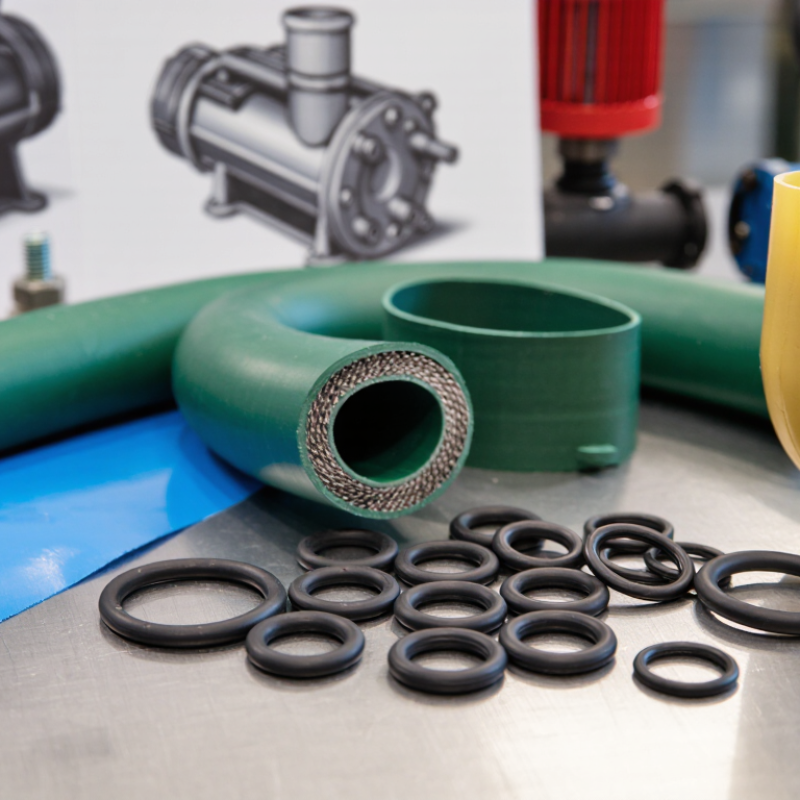
Choosing the right material for oil exposure is rarely a simple matter of picking the hardest rubber. In 2026, engineers must consider oil type, temperature, pressure, movement, abrasion, and expected service life. A seal inside a hydraulic pump faces different risks from a gasket near a hot engine.

So, which materials are best for oil resistant applications? Nitrile rubber remains a practical choice for many seals, hoses, and gaskets because it balances oil resistance, flexibility, and cost. Hydrogenated nitrile rubber performs better under heat and mechanical stress. Fluorocarbon rubber, commonly known as FKM, offers strong resistance to fuels, mineral oils, and elevated temperatures. It costs more. The performance can justify it.

PTFE is useful when chemical resistance and low friction matter. However, it may deform under sustained pressure if the design lacks support. Polyurethane can resist abrasion and oil, yet high heat or certain chemicals may reduce its reliability. Material charts help, but they cannot replace testing.

Real-world selection needs evidence. Engineers should review supplier data and test samples using relevant methods, including ASTM D471 or ISO 1817 where appropriate. Check hardness, swelling, tensile strength, compression set, and changes after exposure. A small seal may look unchanged while losing flexibility inside. That detail matters.

There is no universal winner. Oil formulations also change. Additives can surprise even experienced teams. A careful specification, documented testing, and honest review of failure history create a safer, more dependable choice. The best material is the one proven in the actual application.

2026 Best Materials for Oil Resistant Applications

Oil Resistance: Definition, Properties, and Performance Requirements

Oil resistance is the ability of a material to retain function after contact with oils. That contact may involve immersion, splashing, vapor, or repeated wiping. Performance depends on oil chemistry, temperature, exposure time, and mechanical stress. A seal can look unchanged yet lose elasticity. Swelling, softening, cracking, and mass gain are common warning signs. Low absorption helps, but it does not prove long-term reliability.

Engineers assess tensile strength, elongation, hardness, compression set, and volume change before and after exposure. They should test the actual oil, not only a laboratory substitute. A sample heated to 100°C may behave differently from one tested at room temperature. Pressure and movement matter too. A static gasket and a moving shaft need different performance limits. Permeation also matters when thin oils pass through microscopic pathways.

Practical evaluation often combines immersion testing, dimensional checks, and repeated compression. Visual inspection alone is weak evidence. From experience, selecting only from a resistance chart can create false confidence. Real assemblies include rough surfaces, installation errors, heat cycling, and contaminated fluids. One overlooked factor can shorten service life. That margin is often debated. More testing may reveal an uncomfortable answer: the first material choice was not the best one.

Key Factors in Selecting Materials for Oil-Resistant Applications

Choosing materials for oil-resistant applications requires more than checking a resistance chart. The oil type matters, including additives, temperature, pressure, and exposure time. A seal that performs well in mineral oil may swell in synthetic fluid. Compatibility data should guide the first selection, not replace testing.

Temperature changes material behavior. Heat can accelerate swelling, hardening, and loss of elasticity. Pressure may increase fluid penetration through small gaps. Abrasion also matters when components move or carry contaminated oil. In these conditions, engineers should compare elastomers, plastics, metals, and protective coatings against the actual operating environment. Look closely at hardness, tensile strength, compression set, permeability, and low-temperature flexibility. Small differences can affect service life.

Real-world testing often reveals what laboratory tables miss. A useful test can expose samples to the exact oil, temperature, pressure, and cleaning chemicals used in service. Check dimensions before and after exposure. Record mass change, surface cracking, stiffness, and leakage. I have seen a material pass a short test but fail after repeated heat cycles. That result was inconvenient, but valuable. Selection should also consider installation errors, maintenance intervals, and replacement availability. The strongest material is not always the most practical choice. Erotiske

2026 Best Materials for Oil Resistant Applications - Key Factors in Selecting Materials for Oil-Resistant Applications

Material Typical Continuous Service Temperature Resistance to Mineral Oils and Hydraulic Fluids Resistance to Fuels and Aromatic Hydrocarbons Key Advantages Main Limitations Typical Oil-Resistant Applications
Nitrile Rubber (NBR) Approximately −40 to 100 °C; special grades can reach about 120 °C Excellent
Widely used with petroleum-based oils and many hydraulic fluids
Good
Suitable for many fuels, but performance depends on formulation and fuel composition
Good balance of oil resistance, tensile strength, abrasion resistance, flexibility, and cost Poor resistance to ozone, weathering, sunlight, and some polar fluids; limited high-temperature capability O-rings, seals, gaskets, hoses, diaphragms, fuel-system components, and hydraulic seals
Hydrogenated Nitrile Rubber (HNBR) Approximately −40 to 150 °C, depending on grade and compound Excellent
Strong resistance to petroleum oils and many hydraulic fluids
Good
Improved resistance to sour gas and some aggressive fuel environments compared with standard NBR
Better heat, ozone, aging, and mechanical-fatigue resistance than standard NBR Higher cost than NBR; not compatible with every highly aromatic or strongly polar chemical Automotive seals, oilfield equipment, high-temperature hydraulic seals, and dynamic sealing systems
Fluoroelastomer (FKM) Approximately −20 to 200 °C; some compounds support higher short-term temperatures Excellent
Highly resistant to mineral oils, lubricants, and many hydraulic fluids
Excellent
Strong resistance to fuels, aliphatic hydrocarbons, and many aromatic hydrocarbons
Excellent heat, chemical, ozone, and compression-set resistance Limited low-temperature flexibility; some grades perform poorly in hot water, steam, amines, ketones, and certain acids High-temperature oil seals, fuel-system seals, chemical-process gaskets, and aerospace fluid systems
Ethylene Propylene Rubber (EPDM) Approximately −50 to 150 °C Limited
Generally unsuitable for petroleum oils and hydrocarbon-based lubricants
Limited
Swells or deteriorates in many fuels and hydrocarbon solvents
Excellent resistance to weathering, ozone, hot water, steam, and many water-based fluids Poor compatibility with mineral oils, petroleum fuels, and hydrocarbon lubricants Water-based hydraulic systems, brake-fluid seals based on glycol formulations, outdoor gaskets, and steam applications
Polytetrafluoroethylene (PTFE) Approximately −200 to 260 °C, subject to pressure and application conditions Excellent
Very low absorption and broad compatibility with oils and hydraulic fluids
Excellent
Resistant to most fuels and many hydrocarbons
Very broad chemical resistance, low friction, non-stick behavior, and wide temperature range Prone to creep and cold flow; relatively low wear resistance unless modified; limited elastic recovery Static seals, valve seats, backup rings, piston rings, gaskets, and low-friction bearing components
Polyether Ether Ketone (PEEK) Approximately −60 to 250 °C for continuous service in suitable designs Excellent
Maintains strength and dimensional stability in oils and hydraulic fluids
Excellent
Highly resistant to fuels and many hydrocarbon chemicals
High strength, stiffness, wear resistance, fatigue resistance, and dimensional stability at elevated temperatures High material and processing cost; may require design allowances for limited flexibility High-performance seals, valve components, wear rings, bearings, pump parts, and oil-and-gas equipment
Thermoplastic Polyurethane (TPU) Approximately −40 to 80 °C; selected grades can approach 100 °C Good
Good resistance to mineral oils and many hydraulic fluids
Good
Often suitable for fuels, but compatibility varies by polyester or polyether formulation
High abrasion, tear, and impact resistance; excellent flexibility and load-bearing capability Temperature capability is lower than FKM, PTFE, or PEEK; may be affected by moisture, hydrolysis, or certain solvents Hydraulic hoses, seals, scrapers, protective covers, wheels, and abrasion-resistant components
Ultra-High-Molecular-Weight Polyethylene (UHMW-PE) Approximately −100 to 80 °C, depending on load and design Good
Low absorption and good resistance to many oils and lubricants
Good
Generally resistant to many fuels, although swelling can occur in some solvents
Very low friction, excellent abrasion resistance, impact strength, and low moisture absorption Limited temperature and creep resistance; lower stiffness than engineering plastics such as PEEK Wear strips, bearings, liners, seals, scrapers, conveyor components, and sliding parts exposed to oil
Silicone Rubber (VMQ) Approximately −60 to 200 °C Limited
Resistance varies; generally not preferred for petroleum oils under demanding conditions
Limited
Often unsuitable for fuels and aromatic hydrocarbons
Very wide temperature range, excellent flexibility, weathering resistance, and low-temperature performance Poor abrasion and tear resistance; may swell or lose strength in oils, fuels, and many solvents High- and low-temperature gaskets, electrical seals, medical components, and applications using compatible fluids
316 Stainless Steel Often suitable for temperatures above 300 °C; final limit depends on stress, oxidation, and design Excellent
Does not swell like elastomers and is compatible with most petroleum oils
Excellent
Generally suitable for fuels and many hydrocarbon environments
High mechanical strength, corrosion resistance, dimensional stability, and low permeability Higher density and cost than plastics; may suffer from galling or chloride-related corrosion in unsuitable environments Oil tanks, pipe fittings, pump parts, valves, fasteners, filters, and structural components
Ratings are general engineering guidelines. Actual compatibility depends on fluid composition, temperature, pressure, exposure time, concentration, mechanical loading, and the specific material formulation. Always verify the final design with supplier compatibility data and application testing.

Comparison of Metals, Elastomers, Plastics, and Composites

2026 Best Materials for Oil Resistant Applications

Selecting an oil-resistant material starts with chemistry, not price. Crude oil may contain aromatics, water, sulfur compounds, and aggressive additives. Temperature, pressure, and exposure time also change performance. The AMPP/NACE IMPACT study estimated global corrosion costs at US$2.5 trillion annually, equal to 3.4% of global GDP. That figure covers many industries, but it shows why material selection deserves engineering attention.

Metals provide structural strength and predictable dimensional stability. Carbon steel is economical, yet water and acid gases can accelerate corrosion. Stainless and nickel-based alloys improve resistance, but their cost can rise sharply. Elastomers are effective for seals and flexible connections. Nitrile rubber handles many mineral oils, while fluorocarbon elastomers generally perform better at higher temperatures. ASTM D471 measures swelling, mass change, and hardness after fluid immersion. Field compression set may still tell a different story. Seals fail quietly.

Plastics offer low weight and strong chemical resistance. Polytetrafluoroethylene resists many fluids, but creep can limit loaded applications. Polyether ether ketone retains strength at elevated temperatures, although it is costly. Polyamide is practical, yet moisture absorption can alter dimensions. Fiber-reinforced composites reduce weight and improve stiffness, but resin selection controls oil permeation and temperature resistance. ISO 175 evaluates plastic changes after liquid exposure, while ISO 23936-1 addresses nonmetallic materials in oil and gas equipment. A laboratory result is not a field guarantee. Pressure cycling, installation damage, and contaminated fluids still require testing.

Material Selection by Temperature, Pressure, and Chemical Exposure

2026 Best Materials for Oil Resistant Applications

Material Selection by Temperature, Pressure, and Chemical Exposure

Oil resistance is not a single material property. In field service, I examine temperature peaks, pressure cycles, and the exact fluid composition before choosing a polymer or elastomer. A seal exposed to hot hydraulic oil may behave differently after contact with additives, water, or cleaning agents. Compatibility data helps, but real testing remains essential.

For moderate temperatures and pressures, nitrile-based compounds can provide practical resistance to mineral oils. Higher temperatures may require fluorinated elastomers or engineered plastics, depending on flexibility and sealing demands. At extreme pressure, hardness alone is not enough. I check extrusion gaps, compression set, surface finish, and rapid decompression risk. Fit matters.

Chemical exposure can change the decision quickly. Aromatic oils, synthetic lubricants, fuels, and sour fluids may attack materials through swelling, cracking, or softening. A material that performed well in a static immersion test may fail during pressure cycling. That result is easy to overlook. I prefer testing samples under expected temperature, pressure, and exposure time, then inspecting mass change, hardness, dimensions, and visible damage. Some early selections have looked convincing on paper but failed after repeated thermal cycles. That experience keeps the process cautious, especially when operating data is incomplete.

2026 Best Materials for Oil Resistant Applications

Material selection by temperature, pressure, and chemical exposure

How to read this chart: The bars show typical upper continuous-use temperature limits for common oil-resistant material families. Actual limits vary with compound formulation, pressure, mechanical stress, sealing design, and exposure time.

For high-pressure oil systems, select a material only after checking extrusion resistance, hardness, backup-ring requirements, and temperature derating. NBR is commonly selected for general mineral oils, HNBR for higher-temperature or sour-service conditions, FKM for demanding oil and fuel exposure, PTFE for broad chemical resistance and low friction, and FFKM for extremely aggressive chemicals and high temperatures.

Testing, Maintenance, and Common Industrial Applications

2026 Best Materials for Oil Resistant Applications

Oil exposure is rising, not fading. The International Energy Agency’s Oil 2024 report projects global oil demand near 105.4 million barrels daily by 2030. That pressure makes material testing more practical than brochure claims. For elastomers, test specimens in the actual lubricant at operating temperature. ASTM D471 and ISO 1817 evaluate volume change, hardness, tensile strength, and mass variation. Record results after immersion, then repeat them after thermal cycling. A clean pass can still mislead.

Maintenance Begins with Inspection

Maintenance begins with inspection, not replacement. Check seals for swelling, surface cracking, softness, and permanent compression every service interval. Wipe away oil films before inspection. Small leaks often hide behind guards or beneath flange joints. PlasticsEurope reported 413.8 million tonnes of global plastics production in 2023, yet material volume does not prove chemical resistance. We sometimes overtrust data sheets. Field contamination, pressure pulses, and mixed fluids can change performance.

Common Applications and Material Selection

Common applications include hydraulic systems, pump seals, fuel handling equipment, compressors, conveyors, and processing lines. Nitrile rubber suits many petroleum-based fluids, while fluorinated elastomers tolerate higher temperatures and aggressive chemicals. Polyurethane works well where abrasion matters, but selected grades may absorb certain oils. Test the exact compound. This is often missed. Maintenance records should include fluid type, temperature, exposure time, hardness readings, and replacement reasons. A failed seal is useful evidence, if someone records it.

FAQS

Is oil resistance the same for every application?

No. Temperature, pressure, fluid chemistry, and exposure time all influence performance. A seal may survive cool oil but fail in heated oil. Conditions matter.

Which material suits moderate oil service?

Nitrile-based compounds often suit moderate temperatures and pressures. They work well with many mineral oils. Check the exact formulation before installation.

When are fluorinated elastomers or engineered plastics useful?

They may suit higher temperatures or aggressive chemicals. Their stiffness can affect sealing and installation. Higher temperature does not guarantee universal compatibility.

How does pressure affect material selection?

Check extrusion gaps, hardness, compression set, and surface finish. Rapid decompression can also damage seals. Harder is not always better.

Which fluids can create unexpected problems?

Aromatic oils, synthetic lubricants, fuels, and mixed fluids may cause swelling or cracking. Water and cleaning agents can change compatibility. A clean fluid test may mislead.

How should oil-resistant materials be tested?

Test samples in the actual fluid at operating temperature. Record mass, hardness, dimensions, tensile strength, and visible damage. Repeat testing after thermal cycles.

What should maintenance teams inspect?

Look for swelling, surface cracks, softness, and permanent compression. Wipe away oil films first. Check behind guards and beneath flange joints.

Which materials fit common industrial applications?

Nitrile suits many petroleum-based fluids. Fluorinated elastomers handle higher temperatures and aggressive chemicals. Polyurethane can resist abrasion, but some grades absorb certain oils.

What information should maintenance records include?

Record fluid type, temperature, exposure time, hardness readings, and replacement reasons. Include pressure conditions and failure photographs. Missing records weaken future decisions.

Why can a material pass testing and still fail in service?

Static immersion may not reproduce pressure pulses or thermal cycling. Field contamination can change the result. Paper selections sometimes look convincing, then fail.

Conclusion

Choosing the right material for oil-resistant applications requires more than simply selecting a substance that does not dissolve in oil. Oil resistance includes the ability to maintain strength, flexibility, dimensional stability, sealing performance, and surface integrity during long-term contact with petroleum-based fluids, lubricants, fuels, or synthetic oils. The best choice depends on operating temperature, pressure, exposure time, mechanical stress, and the presence of heat, chemicals, or abrasion. Metals often provide strength and heat resistance, while elastomers are valuable for seals and gaskets because of their flexibility. Plastics and composites can offer low weight, corrosion resistance, and design flexibility when properly matched to the working environment.

To determine which materials are best for oil resistant applications, engineers should compare chemical compatibility, temperature limits, pressure ratings, wear behavior, and manufacturing requirements. Testing may include immersion, aging, compression, tensile, leakage, and dimensional-stability evaluations. Regular inspection and replacement of degraded parts are also essential. These principles apply across hydraulic systems, automotive equipment, industrial machinery, pumps, valves, storage systems, and other environments where reliable oil resistance supports safe and consistent performance.

Isabella

Isabella

Isabella is a dedicated marketing professional with a sharp focus on driving brand growth and engagement through strategic content creation. With an extensive background in digital marketing, she combines her passion for storytelling with her keen understanding of industry trends to deliver......